Section outline

    • Qualities of a director

      It takes a special kind of person to sit on the board of directors of a community radio station. Radio experience helps, of course, and a belief in the station's mission goes without saying. But that isn't always enough, and may even be less important than other qualities. Above all, a director needs a combination of people skills and business savvy, an ability to keep others motivated, while keeping the organization afloat and on track. All else being equal, a small business owner who has never set foot inside a radio studio might be more valuable than a mixing board magician who wilts at the sight of a financial statement!

    • Flip through these cards describing the qualities of a good director. How many of these do you have? How many could you acquire through training, practice and mentoring?

    • A well-balanced board

      A well-balanced board should combine the strengths of all its directors, like a team of super-heroes. Someone who is good at taxes will step up when it's time to file with the Canada Revenue Agency, while somebody who has good community connections can canvas for volunteers and a technical-minded member advises the manager on purchasing new equipment.
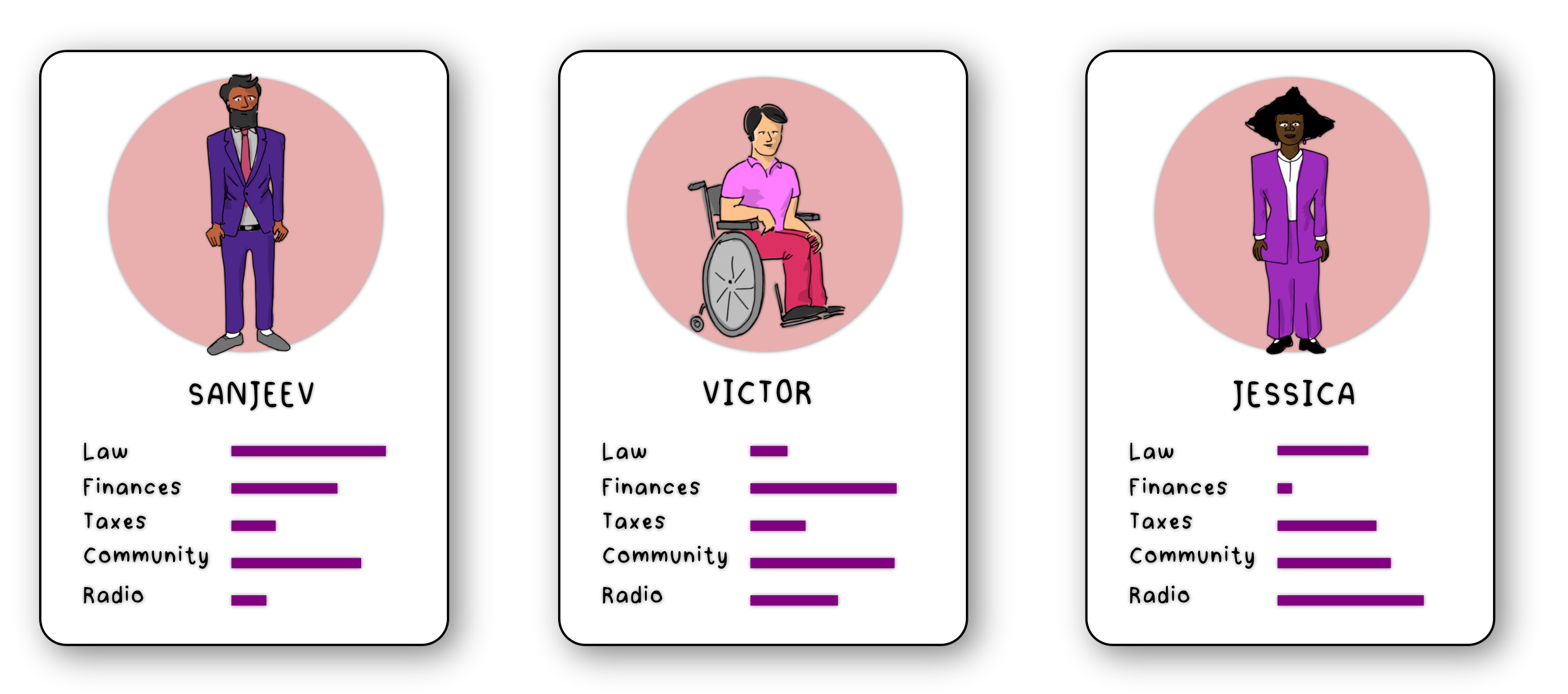
      The trading cards, with people in business attire and different qualities, such as alw, finance and community, written below.

      You can measure the balance of your board, using a skills matrix, such as the one described by Deloitte in the resource below (Appendix D).

    • The Effective Not-for-profit board: A value driving force

      Deloitte

      An introduction to the importance of non-profit governance, the role and responsiblities of the board within an organization, the qualifications of individual directors and tips on improving governance in an increasingly competitive sector. Several useful appendices offer tools for evaluating a board's effectiveness.

    • The skills matrix

      Decide what skills are important to your station, and rank each member according to those skills. Then sum the numbers to identify your board's strengths and weaknesses. Any weaknesses should be a recruitment target for new members. You can also complement your skills through training. 

    •   Director 1 Director 2 Director 3
      Director name      
      Belief in the mission      
      Board of director experience      
      CEO succession planning      
      Community connections      
      Financial      
      Fund raising      
      Grant writing      
      Human resources      
      Other?      

    • Rate yourself on Deloite's skills matrix. (Appendix D). What are your strengths and weaknesses? Can you compensate for any gaps through training or mentoring? 

    • The many reasons to join a board

      Of course, it isn't enough to be good at being a director. You need to enjoy it as well! BoardSource lists some of the benefits of being on a board. Do any of these describe you?

      • You have skills you know are needed and wish to share
      • You want to see the organization flourish. 
      • There are specific changes you hope to bring to the organization.
      • You feel good by doing good.
      • You enjoy collaborating with interesting people who have the same interests and values.
      • You want to learn new skills.
      • You enjoy being recognized for your efforts.
      • You want to give back to your community.
      • You enjoy meetings, making decisions and seeing things get done.

      Because the role is unpaid, it is often assumed that people volunteer to sit on a board of directors out of altruism. No doubt, most directors are motivated at least in part by a desire to help others or help the organization. But many will also have personal, more selfish motivations. Consultant Chris Jarvis says it is important to recognize these, because they can create more powerful committments.

    • Many people join boards to boost their CV or to network. That's OK. But never use being on a board for your own financial gain or the gain of other organizations you work for. This is a conflict of interest! You could be sued if your own interest detracts from the station, and you will certainly undermine the credibility of the organization.

    • Personal satisfaction

      Everyone gets their own personal satisfication from joining a board.

      Ken Zakreski was a founding board member of CHLY in Nanaimo, British Colombia. He got a lot of joy from his time on the board, not least overseeing the creation of Nanaimo's first community radio station. But there was one regular activity of the board that he especially enjoyed.

    • Board meetings

      Ken Zakreski  

    • As a former radio host at K1037 on the Kahnawake Mohawk reserve, Quebec, Joseph Delaronde is well known by his neighbours. Like many stations, K1037  has come close to shutting its doors several times. As manager and board member, he says he has stepped in help save it. Why is he willing to take on such stressful work?

    • Love of the station

      Joe Delaronde


    • Brandon Logan points out the many skills that can be learnt on a board.

    • The skills you can learn

      Brandon Logan