
3. Role of the board
Section outline
-
-
There are two broad categories of non-profit board: operational and governing.
Operational boards
Young organizations without a lot of funding will tend to have operational boards. These will deal with long term strategy as best they can, but directors will also roll up their sleeves and help out with daily business... very often, because there is no paid staff to do it. Naturally, they won't have as much time to spend on planning, but at this stage, the main concern of the board is getting an organization off the ground, or simple survival.
Governing boards
A well-funded, more mature organization is likely to hire staff to conduct all the day-to-day business, and will be more concerned with the long term objectives of the organization, with advocacy, finding funding sources, developing policy and community relations. The board may have specialized members to deal with financial and legal issues and rarely interact directly with staff.

-
Are these tasks operations or governance? Drag them onto the correct picture.
-
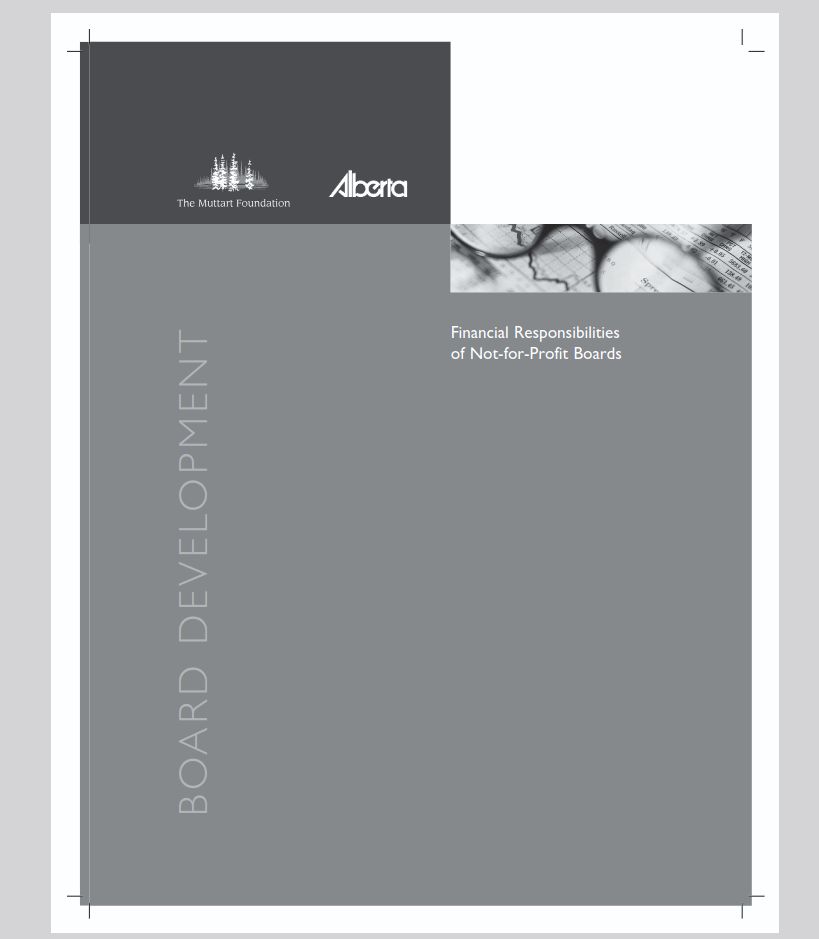
Financial Responsibilities of Not-for-profit Boards
The Muttart Foundation
A deep dive into financial management at a non-profit. Covers topics like opening a bank account, writing cheques, and approving loans as well as planning activities like drawing up a yearly budget and making sure the organization stays within the budget.
-

Strategy
Whether the board develops the station's long term strategic plan itself, or delegates it to staff, it is always the board's responsibility to ensure the plan is realistic and that it is being followed.

Risk Management
The board should understand the station's tolerance to risk, and ensure staff are aware of potential sources (financial, compliance, ethical etc.)

Setting the tone
If a board display passion, ethical standards, and openness staff will follow suit. Directors should establish good relations with staff that foster committment to strategic plan, and to each other.

Integrity
A board that honours rules and regulations and keeps the books in order will inspire confidence among stakeholders and the public. A good reputation will pay off when it comes time to seek donors and partners.

Performance evaluation
A board should conduct regular evaluations of staff, in particular the station manager, the station, and itself. There should be documentation and written in place to ensure evaluations are fair and timely.

Recruitment
The board is responsible for hiring the Station Manager. This doesn't just mean reviewing resumes and interviewing. The board should be actively searching the community for candidates. It should also have a solid succession plan so momentum is not lost during transitions.

Policy
Decisions made ad hoc lead to resentment and disfunction. The board should develop policy documents to guide major decisions on ethical conduct, conflict of interest, whistleblowing, employment, and of course the board's own bylaws.

Compliance
It is the board's responsibility to ensure that the station follows all laws, such as those governing employment, taxation, CRTC licensing, fundraising and non-profit governance.

Community
Directors are ambassadors for the station. They should be promoting it among their network, helping forge partnerships, grant opportunities and audience. And they should feed what the community tells them back to the station.
-

Making staff feel comfortable
Joseph Delaronde
-

Ten Basic Responsibilities of Non-Profit Boards
Friends of Kootenay Lake
This document covers many of the responsibilities of a board that we have so far seen in this module, with a focus on the Governing Board. It also covers some that we will see in future modules, including community advocacy, appeals and performance evaluation.
-
-