
3. Science of sound
Section outline
-
-
-
Digital sound
As we saw in the video, digital devices represent a sound wave as a series of steps that indicate air pressure at any give time. You can actually see these steps if you zoom into a sound wave in an audio editor. Here they look like little points.
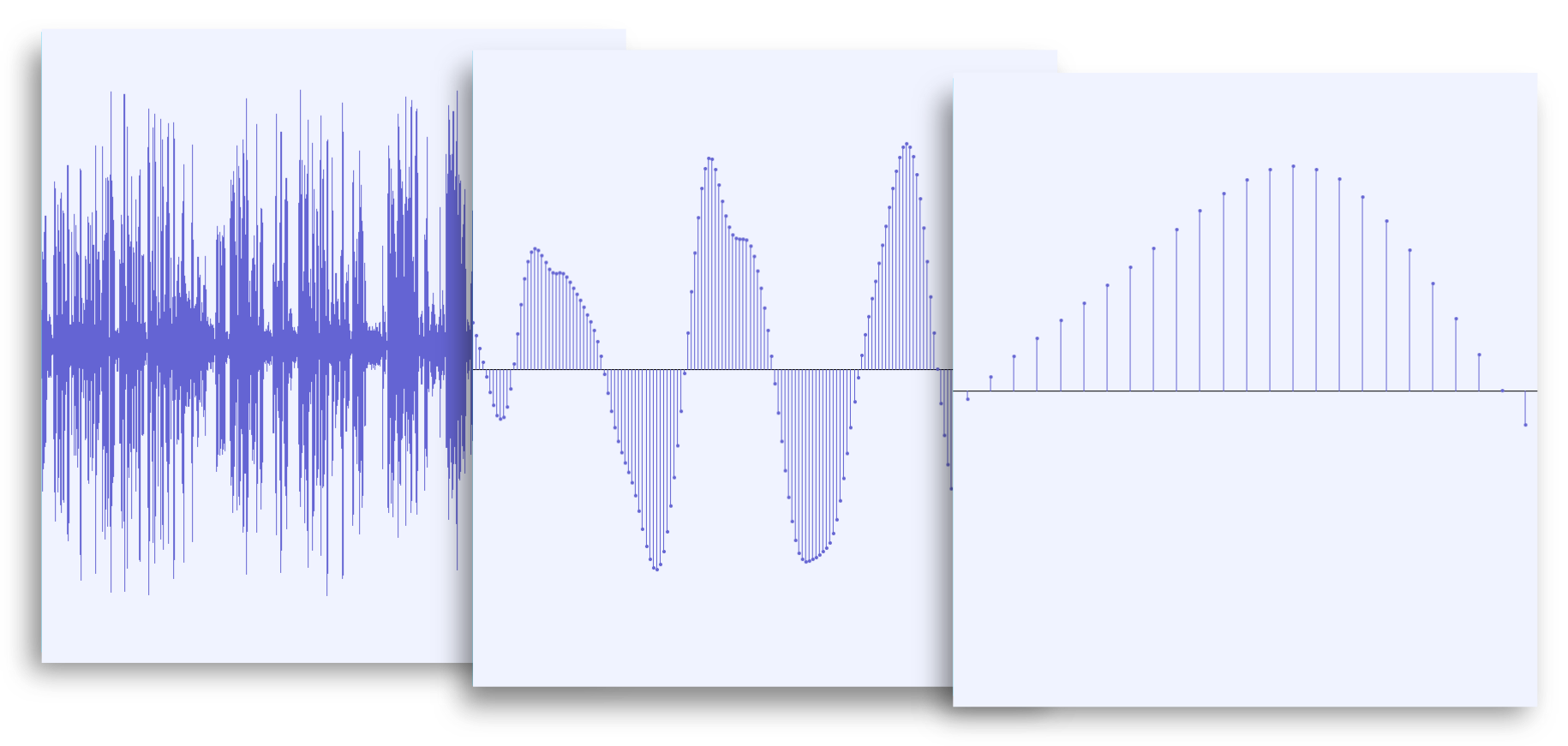
The more points squashed into a given lapse of time, the better the quality of the recording. It's the same way an image with a higher resolution image-- with more pixels per square centimetre--looks better than one with a low resolution.
-
Bit depth
If sample rate is the resolution along the horizontal axis of a wave, bit depth is the vertical resolution. Compact disc and other recorded media typically have a bit depth of 16 bits, which allows for 65,536 different values for any given point.
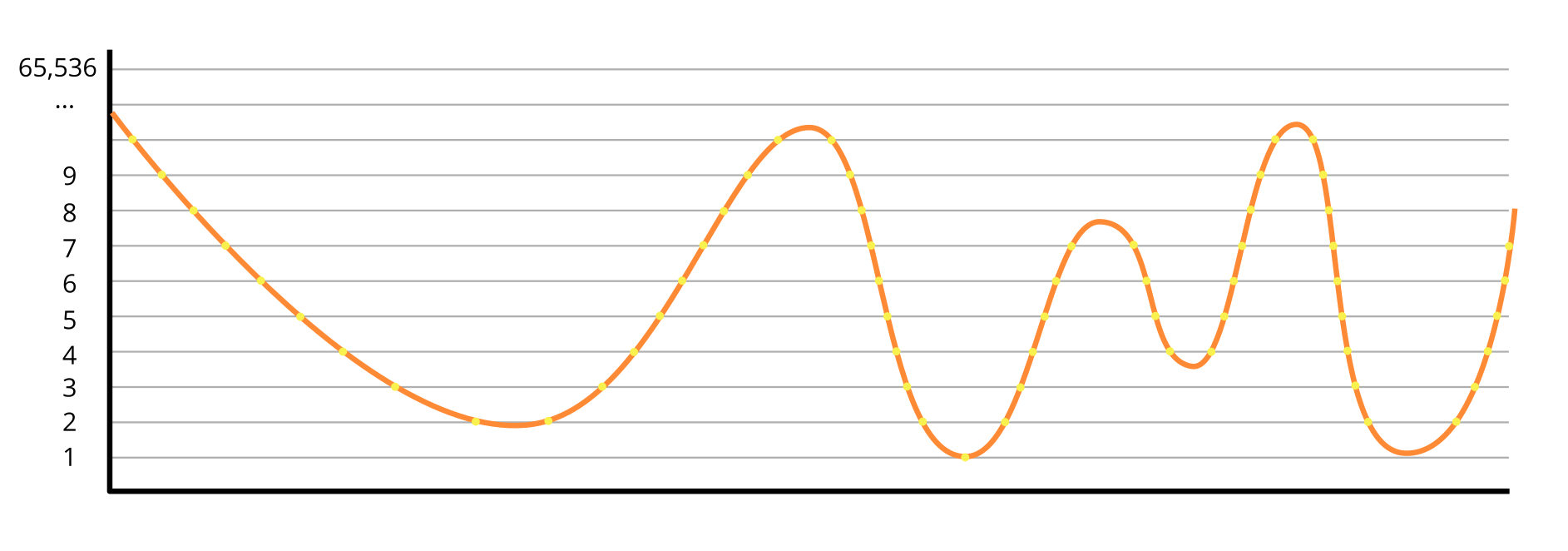
Lower bit depths tend to create noisy recordings, owing to the way the analog-to-digital converter rounds the signal to the nearest value. To overcome this noise, the input gain on the recorder can be raised, but this then limits the dynamic range of the recording, that is, the difference between the quietest and loudest sound you can record.
Until recently, professional recording equipment was 24-bit, which offers more than 16 million different levels. But recent devices now offer a type of bit depth called 32-bit float, which offers almost limitless levels, and a dynamic range far far beyond human hearing. Some of the newest 32-bit recorders can record a pin drop and a nearby jet engine without ever adjustment of the gain control. This Wired article has more details, if you want to explore the subject further.
Although the subject of bit depth and dynamic range is complicated, you will rarely need to change your recorder's settings.
