Section outline

    • In this course you will learn:

      • the power of audio storytelling
      • different formats of audio production
      •  how analog and digital sound work
      • how to record sound in the field
      • tips and tricks for conducting a good interview
      • how to use ambient sound in your production
      • the art of mixing sounds together 
    • Most media -- writing, video, painting, sculpture -- communicate by creating facsimiles of the world around us. Audio replicates it. When we talk, sing or make a radio documentary, we're using the same medium of vibrating air molecules as birds chirping to each other, waves soughing on the beach or jet engines roaring. A well-placed stereo speaker in the trees can fool a flock of birds, and there's no essential difference between listening to a recording of someone you know and hearing them talk to you in person.

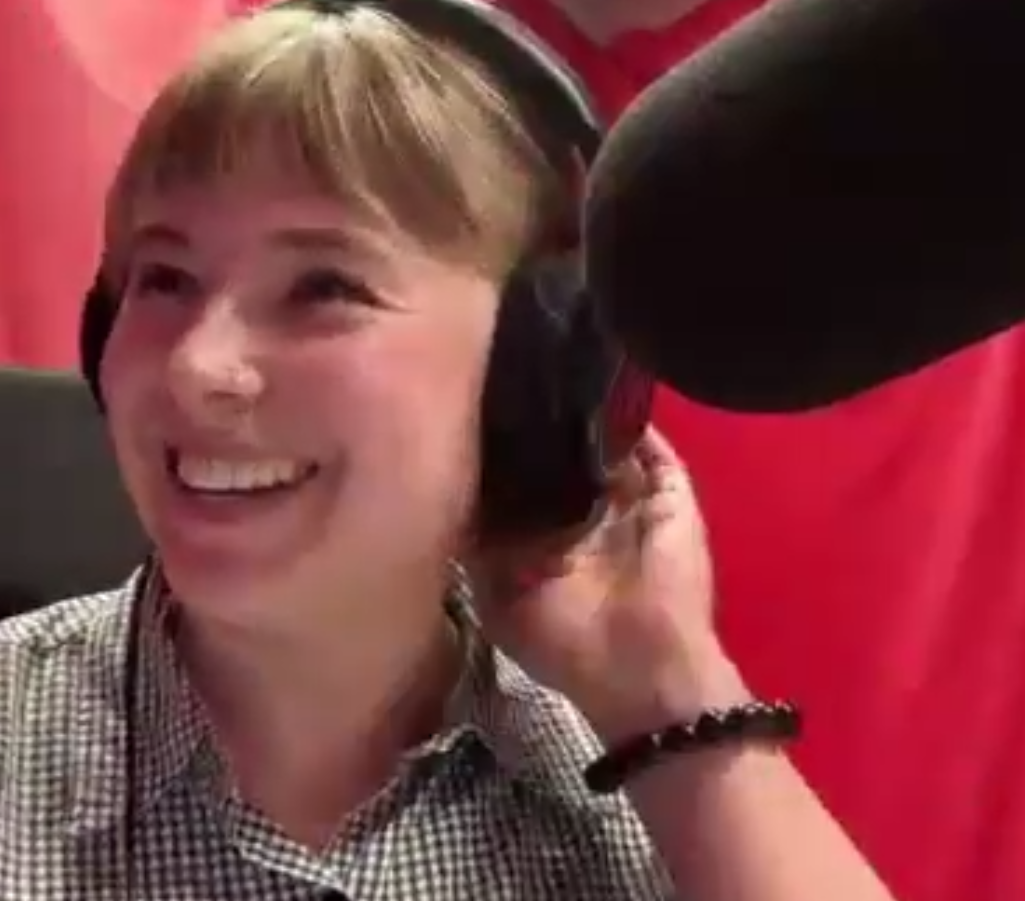
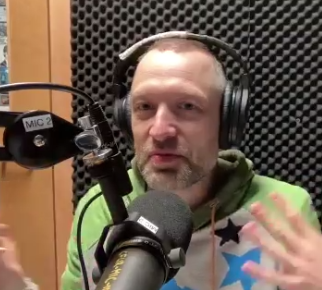
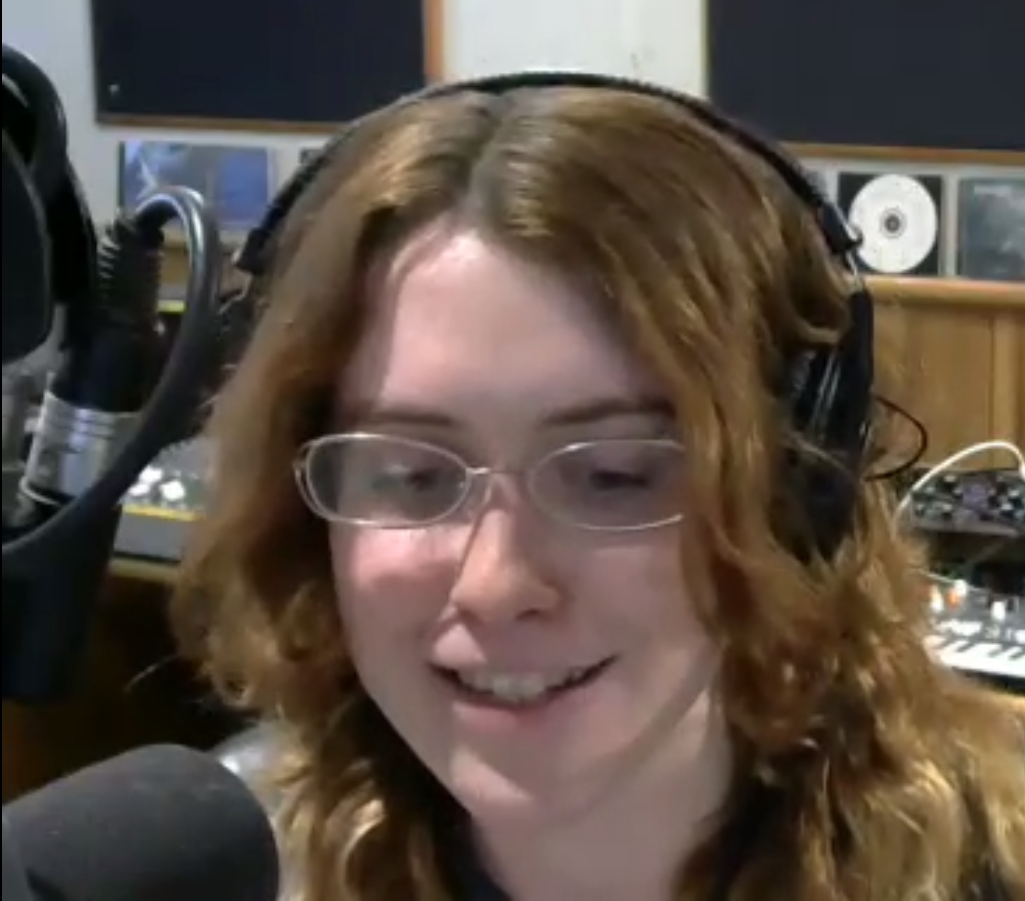
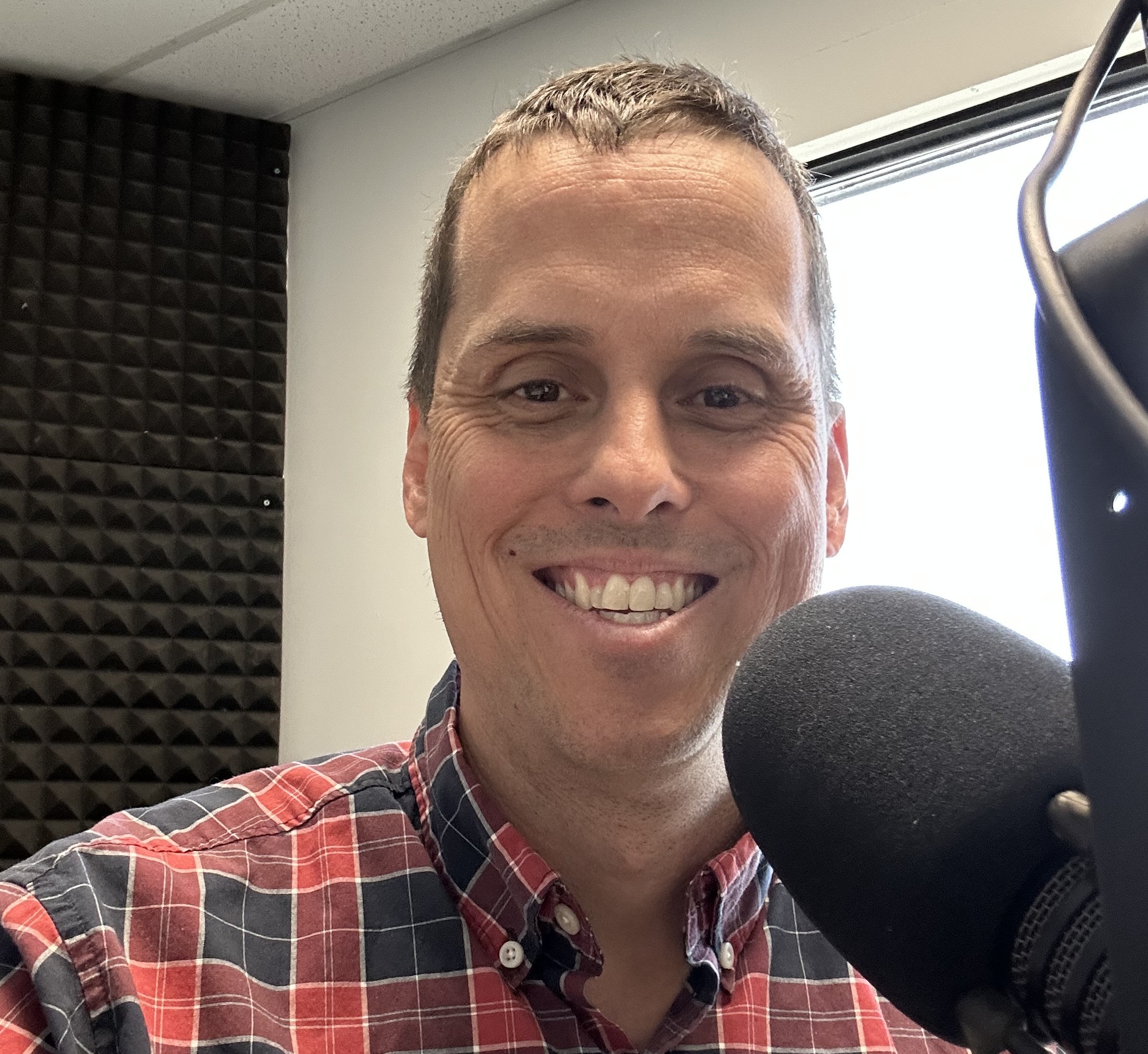
      Perhaps that's why many people say audio feels so natural. They call it "intimate", "direct", "personal." Here's five experienced community radio producers on that subject.  

    • The many faces of radio

      Five community radio reporters


    • Seeing it on the radio

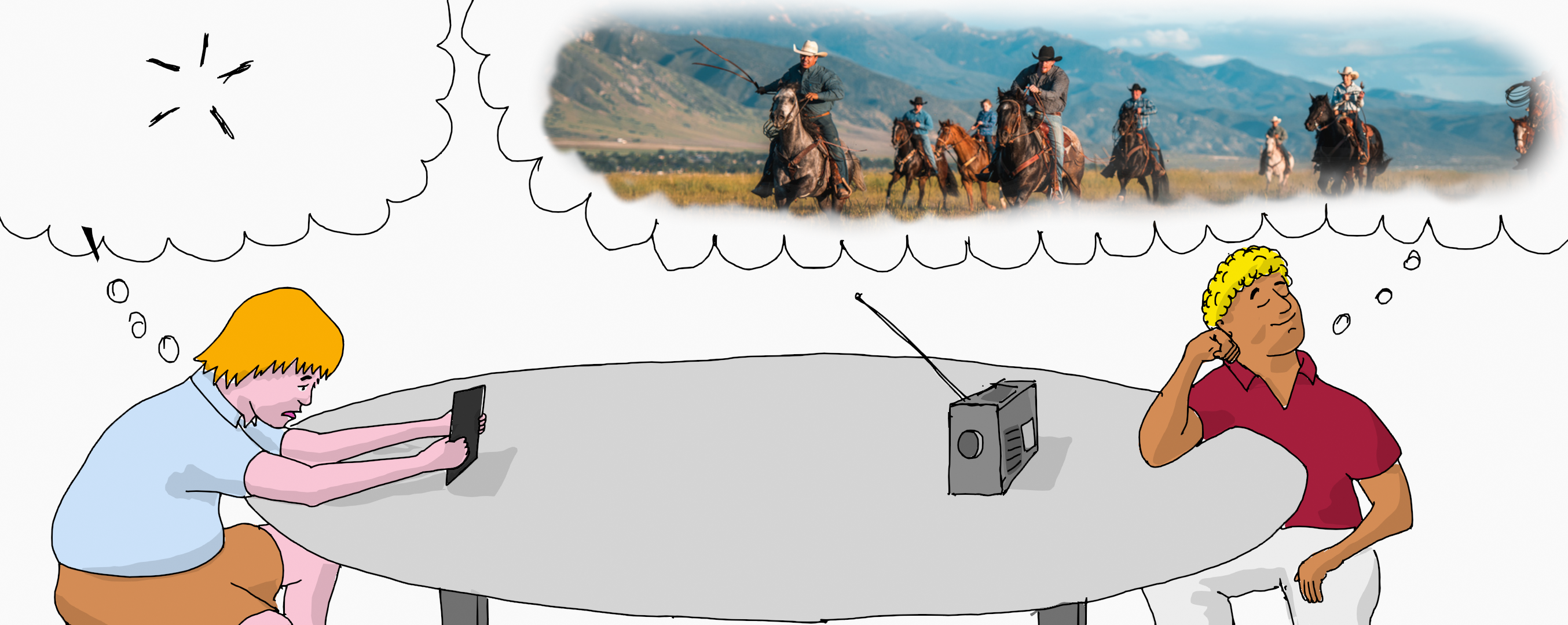
      Although radio has no pictures, it is also often called the most visual of media. This is because radio listeners, unlike TV coach potatoes and cell phone doom scrollers, create images in their head based on the descriptions and the ambient sound they hear.  

      Radio's imaginative spectacle presents a powerful dynamic which is rarely prioritized by alternative electronic media. By giving the listener the opportunity to create an individual filmic narrative and experience through the imaginative spectacle the listener becomes an active participant and "dramaturgist" in the process of communication and listening. This participation is physical, intellectual and emotional.

      Tim Crook, Radio Drama: Theory and Practice (2001)

      One study found that children who listen to radio were able to perform more imaginative tasks, such as inventing new endings to stories and writing alternative dialogue, than children exposed only to television. The researchers concluded that their findings supported Marshall McLuhan's famous dictum that "the medium is the message."
    • Mobile microphones

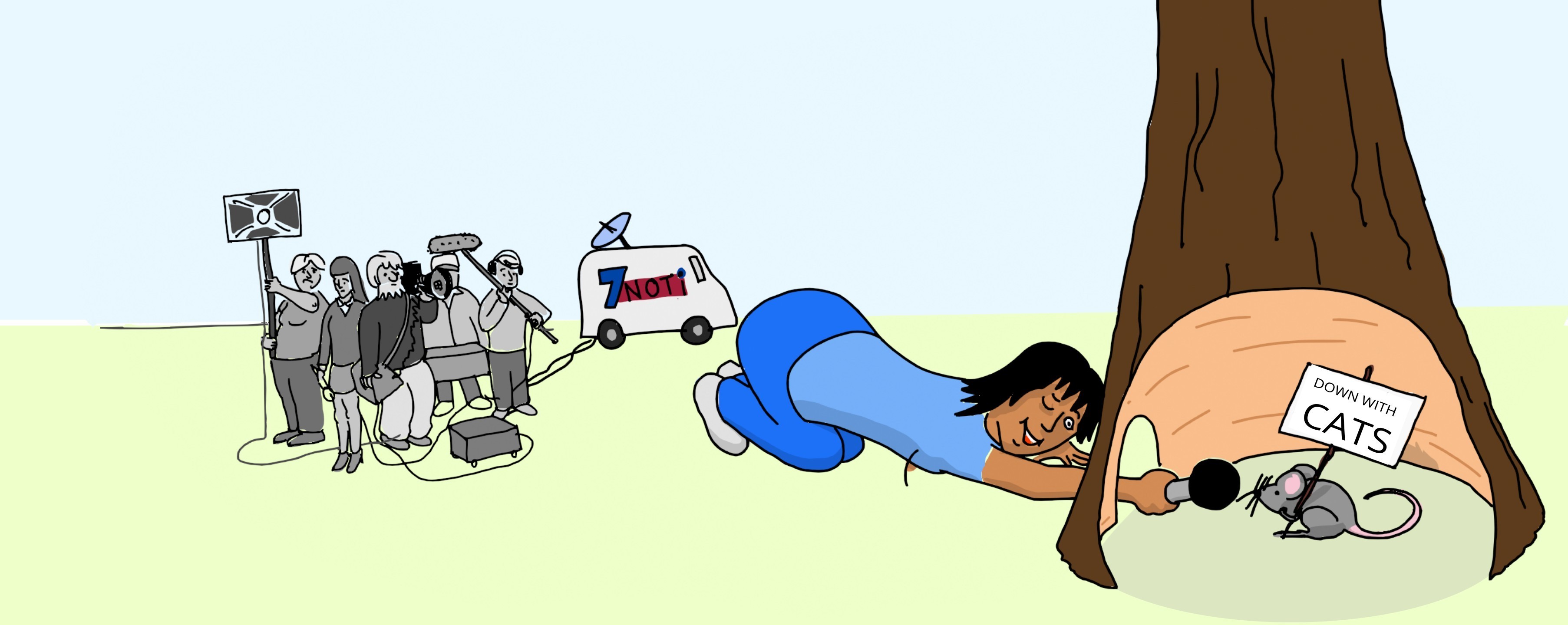
      From a reporter's point of view, radio is more active as well. Producing high-quality video requires bulky equipment and carefully choreographed scenes. In the presence of a camera, natural behaviour goes out the window. A microphone, however, is unobstrusive; it can capture natural conversations as they happen, record from the thick of events unfolding and go places a camera can't... no matter how hard how those places are to reach.
    • The future of sound

      Despite the unique features of audio, its future might appear uncertain in a world of ubiquitous video. The fear isn't entirely new. The Buggles sang that "video killed the radio star" back in 1979.

      But even traditional audio formats are moving to video platforms like TikTok and Youtube. In 2024, Youtube passed Spotify and Apple to become the most popular way to consume podcasts.  

      Jo Coleman is a professor of communications at Birkbeck College, University of London, in England. She thinks audio, especially in the form of community radio, still have a lot going for it. 

    • The future of community radio

      Jo Coleman


    • There are many ways to tell an audio story.  You can make your story as simple as one person talking into a microphone, or two people having a conversation.  You can interview many people and splice and dice their comments into a piece which contains multiple points of view in many voices.  You can bring your listeners into the environment where your story is set by the addition of “wild sound” recorded on location.

      This summary explains some of the ways that you can tell audio stories and compose them into sound works which not only informs your listeners, but also uses the audio medium in creative ways which bring the story to life.

    • INTERVIEW

      One journalist, one or several guests sit down and have a conversation. This is a favourite format because it is friendly, open and inexpensive to produce in both time and money. Interviews can be conducted by phone or internet, but the best interviews are always held in a studio. Don't let the informal sound fool you, though. Intelligent interviews still require research, and may also require editing afterwards.

      Playwright Britta Johnson sat down with Mia Johnson of CJTM in Toronto to talk about her play Life After.

    • Interview

      Mia Johnson


    • PACK

      Similar to a feature story in a magazine – developed around a theme, contains quotes/audio clips from several different people, background sound and music – lively, engaging format. Packs are usually under 10 minutes in length, and require a lot of postproduction including script writing and mixing.

      Ian Gregg reports on the bizarre underworld of antique train whistle thievery for CFUR in Prince George. 

    • Train whistle theft in Prince George

      Ian Gregg


    • DOCUMENTARY

      Documentaries are the radio/tv equivalent of a cover story in a magazine. Documentaries often run 30 or 60 minutes or even longer. The documentary is one of the highest audio art forms – the way the story is told is just as important as the facts and information in the piece. Similar to a pack but often much more research intensive because it’s a deep dive into a subject. It is usually longer than a pack and incorporates more voices, music, sounds which support the premise of the documentary (eg. a story about farming is enhanced when listeners can hear the farmers in their environment).

      An award winning documentary by CKUT’s Jules Bugiel (Montreal) on urban agriculture in Montreal. Commissioned by Viewpoints podcast.

    • Urban agriculture

      Jules Bugiel


    • NEWS REPORT

      Short format report often broadcast as part of a newscast - usually less than 2:00 long, often shorter. Can be script only, voiced by the journalist but the most impactful contain a clip of individual voices speaking about the subject of the report. To get the story out quickly these are likely to be recorded by phone or internet.

    • Cobourg police budget

      Dan Jones


    • VOX POP

      Also known as a streeter, person on the street or question of the day, these consist of several very short interview answers (often as little as a single sentence each) edited together in a lively presentation.

      Christena Lawrie of CFRC in Kingston spoke to Queen's University students what they thought about this year's "faux" homecoming celebrations.

    • Queen’s ‘Foco’ Celebrations to Take Place This Weekend

      Christina Lawrie


    • TAPE TALK

      This is a format where a journalist goes out to cover a story and explains it to the host of the program (the morning show, for example). The journalist is the expert in the subject being discussed, and communicates with a host who is acting as an interviewer. The journalist often prepares clips to reinforce what s/he/they are saying. It sounds like a casual conversation but it is well planned in advance. Here, NCRA National Editor Victoria Fenner chats with reporter Ian Gregg about the potentially dangerous phenomena of the "Spring Dip". 

    • Spring Dip

      Victoria Fenner / Ian Gregg


    • Sound quality

      In a world dominated by video, audio might seem simple, even an afterthought. In fact, sound is a deep and complicated subject, and if you have a nerdy streak at all, makes for fascinating reading. Here's a rabbit hole to go down if you're so inclined. 

    • Sound theory

      Sound on Sound

    • For most of your audio production career, you won't need to worry about most of that, but you will need to obsessed with sound quality. When audio is your principal medium, any distortion, noise, echo, digitization, or poorly set levels is a sure way to lose your listeners. In fact, even in video, the quality of the audio can be more important than the quality of the video. Check out this clip and see which you think would be more difficult to put up with for a long time: poor audio with a high-quality image or blurry video and crystal clear audio.


    • Although you don't need to be an audio engineer to work with sound, it helps to have a basic understanding of what sound is, and how we work with it using digital tools. Let's start with the sound wave. Check out this video to find out where they come from, where they go, and what they have to do with waves in the ocean.


    • Digital sound

      As we saw in the video, digital devices represent a sound wave as a series of steps that indicate air pressure at any give time. You can actually see these steps if you zoom into a sound wave in an audio editor. Here they look like little points.
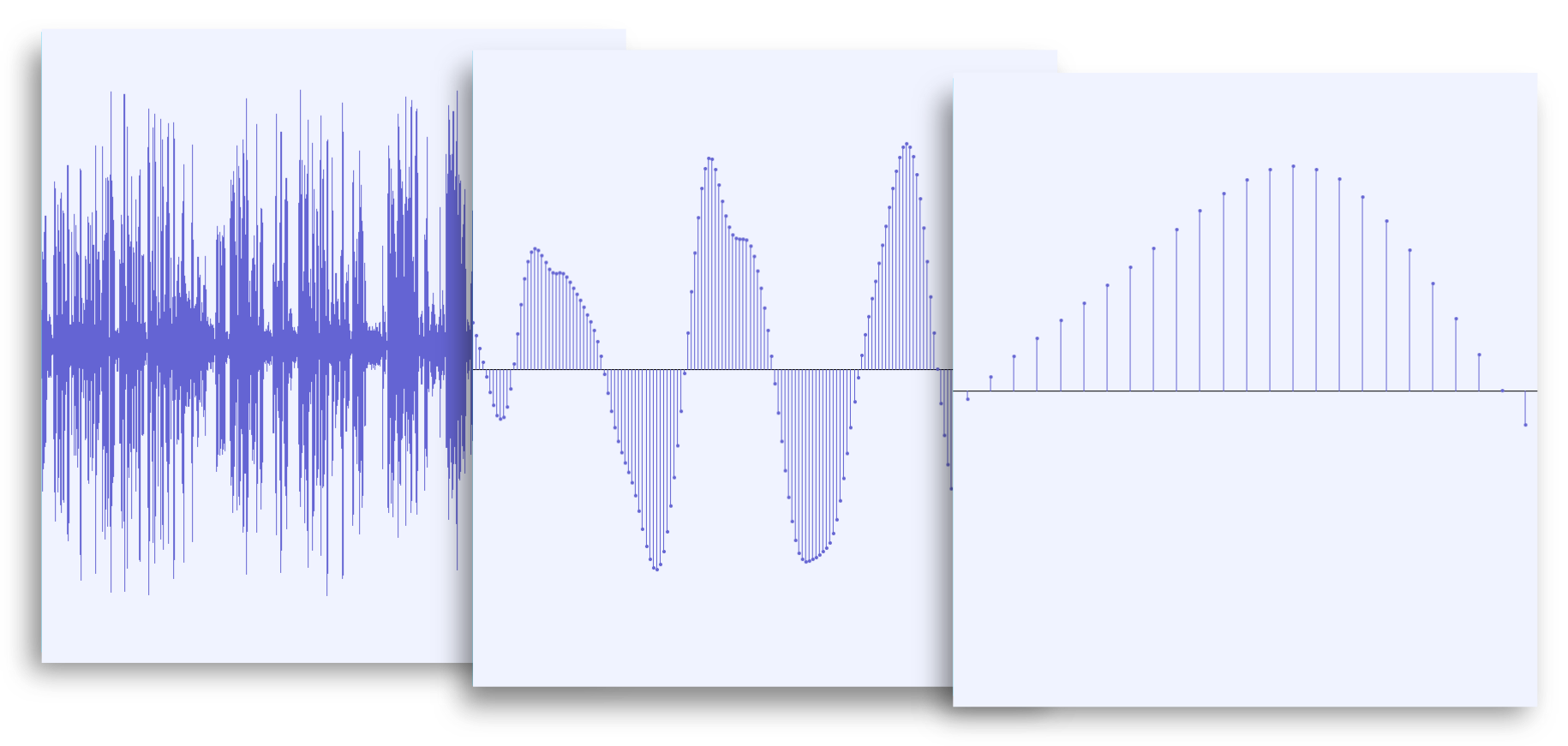
      A series of images that show a sound wave in an audio editor. Each image is zoomed in closer than the previous to reveal the tiny points composing the wave.

      The more points squashed into a given lapse of time, the better the quality of the recording. It's the same way an image with a higher resolution image-- with more pixels per square centimetre--looks better than one with a low resolution. 

    • Sample rate 

      The resolution of the recording is called the sample rate, and is measured in Hertz, or samples per second. The most common sample rates are 44,100 Hz and 48,000 Hz. You will rarely have to adjust your sample rate, and can generally use whatever your recorder is set to. Your audio editor will detect the correct rate when you import audio. However, if you play back audio in the wrong sample rate, it will sound either too fast or too slow. 

    • Bit depth

      If sample rate is the resolution along the horizontal axis of a wave, bit depth is the vertical resolution. Compact disc and other recorded media typically have a bit depth of 16 bits, which allows for 65,536 different values for any given point.
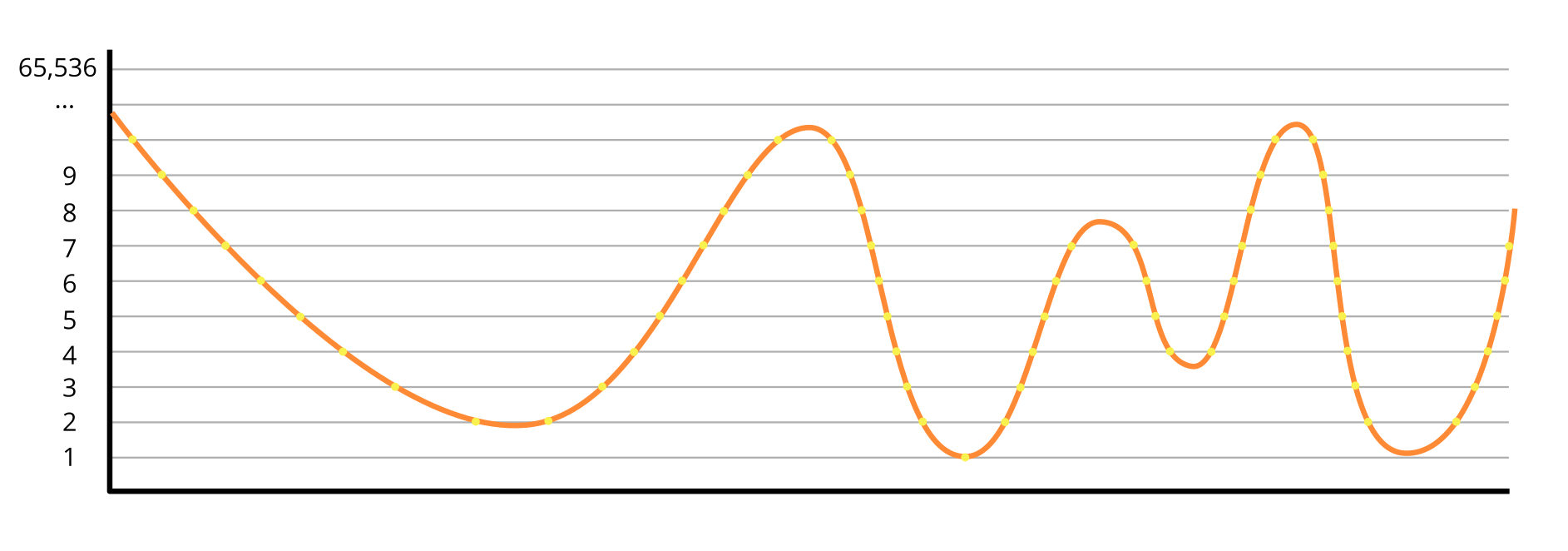
      Lower bit depths tend to create noisy recordings, owing to the way the analog-to-digital converter rounds the signal to the nearest value. To overcome this noise, the input gain on the recorder can be raised, but this then limits the dynamic range of the recording, that is, the difference between the quietest and loudest sound you can record.  

      Until recently, professional recording equipment was 24-bit, which offers more than 16 million different levels. But recent devices now offer a type of bit depth called 32-bit float, which offers almost limitless levels, and a dynamic range far far beyond human hearing. Some of the newest 32-bit recorders can record a pin drop and a nearby jet engine without ever adjustment of the gain control. This Wired article has more details, if you want to explore the subject further.

      Although the subject of bit depth and dynamic range is complicated, you will rarely need to change your recorder's settings. 

    • Audio file compression

      Audio is generally recorded and editing in a format called .wav. This file is essentially a giant list of numbers, each number representing a point or sample in the sound wave. You should perform all your editing with .wav files. However, .wav files can get very big which is a problem if you want to send the file over a slow or low-bandwidth connection. For this reason, you should convert your final production to a compressed format like .mp3. These formats function similar to zip files, by searching through the audio and eliminating or consolidating data that is repeated, imperceptible, such as frequencies beyond human hearing range, or otherwise redundant. The amount of compression is called the bit rate (not to be confused with bit depth or sample rate, nor with the compression audio effect, which we'll discuss in another module), measured in kilobytes per second (kbps). The lower the bit rate the higher the compression and the lower the quality of the resulting audio. For .mp3 a bit rate of 128 kbps to  320 kbps is recommended.

    • Stereo sound uses variations in audio from two speakers to recreate the impression of auditory space.  Depending on the location of a sound source, the sound wave will hit one ear slightly earlier than the other, which allows the human brain to sense where it came from in space. A stereo recording recreates this.  For ambient sounds stereo can be a great way to insert the listener into the scene. For an interview, however, it can be very disconcerting to feel that a speaker is off to one side or another. In this case a mono recording is preferred.

      RECORDINGS OF STEREO.

    • To get good quality sound, you will need good equipment. There is a range of field recorder equipment on the market, with prices varying between about $50.00 up to several thousand dollars.

      You will not need many of the features of the more expensive devices (multiple inputs for external mics, time codes for video, colour displays) but you should avoid cheaper devices not intended for broadcast work (voice note recorders, anything with AI).

    • Recorders large and small

      Field recorders come in many shapes and sizes. Reporter Conrad Fox gives us a tour of his collection.


    • How to use a recorder

      Operating an audio recorder is not difficult. As we mentioned in the previous section, you will rarely, if ever, need to change the recording settings. Even the gain control, which sets the recording volume, can usually be left alone. The most important techniques in using a recorder are how you hold it and where you place it. Here's a review.


    • It is very important that you practice with your recorder. Learn to turn it on and off with ease. Get a feel for long it takes to be ready to record. Test it on a friend. Set the gain control to a decent level and leave it there. Walk around your house or office and record in different rooms. Are you picking up background noise or echo? Are you recording the sound of your hand moving on the recorder or cables rubbing on your leg?
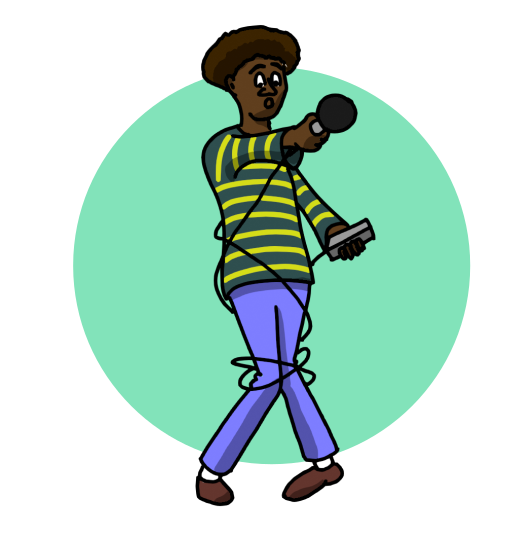
      Figure out how you will carry it into the field. Does it have it's own bag, or is it stuffed in a backpack under your lunch, your laptop and your gym clothes. Are the cables going to get all wrapped up as you try to fish it out? Make sure you have enough batteries and space on the memory card. You might even want to have a spare recorder, just in case your main recorder falls in the mud at an outdoor press conference!

    • The interview is the backbone of talk radio, and, for anyone with a streak of curiousity, the most satisfying aspect of being a producer. The interview is a privileged window onto the world around us that allows us to make connections, to learn and give others a voice.

      It looks easy: two microphones and a list of questions. But a good interview is an art that takes years of practice to perfect (if there is even such a thing as the perfect interview). This section will barely scratch the surface of what there is to know, but hopefully it will pique your curiousity enough to start learning.

      Here our five community radio journalists speak to the NCRA's Conrad Fox on what they've learnt over the years.

    • On interviewing

      Jules Bugiel, Ian Gregg, Mia Johnson, Dan Jones, Christena Lawrie


    • What an interview is and isn't

      A common misconception about interviews is that they exist primarily to gather information. This may be true of informational or background interviews where you talk to someone during your research phase. But once the recorder is running, you should already know most of what an interviewee will tell you. Your questions are prompts to get them to say it. In fact, an interview, especially a radio interview, is as much about how people say something as what they say. In this sense, interviews:

      • allow people to recount an event "in their own words"
      • provide context and nuance to an issue
      • create a human dimension to an otherwise abstract topic
      • hold public figures accountable
      • give public figures, and others, a chance to defend their position
      • foster a sense of connection with people in the news and the community
      • generate excitement, interest, curiosity, appreciation for a subject

      Good radio interviews should feel like a conversation and the listener should feel like they are on a journey of discovery alongside the interviewer. The interview doesn't have to be friendly (and should never be gushing) but it should sound natural, human and dynamic, with a give, a take, a flow and a sense of progression.

      Which brings us to a second misconception about interviews. Although they sound like a conversation, they cannot be conducted like one. Unlike your conversations of every day, which are almost always spontaneous, informal and unplanned, a good interview requires meticulous preparation and research beforehand. During the interview, the interviewer works hard to keep the interviewee on track, to generate energy and interest, maintain rapport, and guide the journey of discovery. If the planning falls apart -- and it often does -- the interviewer must think on their feet to plot a new journey. A good interview may sound effortless, but it can be exhausting work.

    • Look through these cards of the main stages of an interview. See if you can anticipate the stage before flipping the card.

    • Your questions

      The book Interviewing for Radio by Jim Beaman is an excellent primer to the types of questions you will ask of your interviewees. The book is a little dated (it still refers to splicing tape) the journalism fundamentals still apply today. Read the "Asking the questions" section from the bottom of page 79 to 83

    • Interviewing for Radio

      Jim Beaman

      A gentle introduction to working in radio, full of anecdotes and colourful interviews with seasoned professionals recalling their first days on the job, career highlights and tips they picked up a long the way. It is focused on the UK, so check your local libel laws, and a little dated technologically (bulk tape eraser anyone?), but the fundamentals have not changed.

    • Fishing for answers

      It can be very hard to keep an interviewee on track. This is especially so with people not used to being interviewed, people who are keen to talk about a project they are personally invested in, and people who have an agenda to push. It also happens when the interviewer doesn't really know what the interviewee has to tell them.

      To make sure the interview is focused, some interviewers will often "pre-interview" an interviewee to assess what information they have to share, and how they are likely to respond to certain questions. A pre-interview can be less structured and looser than the recorded interview, with lots of interruptions and digressions as you scope out your subject. With the information gained, you can then develop a tighter list of questions knowing in advance what the answers will be.

      Be warned, however. Pre-interviews can also kill the natural sound that is so key to effective radio.  

      [T]he radio interview should sound spontaneous. By all means have a warm-up chat, but do not make it too long, or your interviewee will not sparkle during the interview – the adrenaline will be gone and the excitement lost, and the result will be a stale, lacklustre interview. The interviewee may even come out with an expression like ‘As I was saying before … ’ and refer to something that was said before the interview started. They may omit to relate a brilliant anecdote because they think they have already told it during the interview, when in fact they told it to you during the warm-up chat. (Beaman, p. 80)

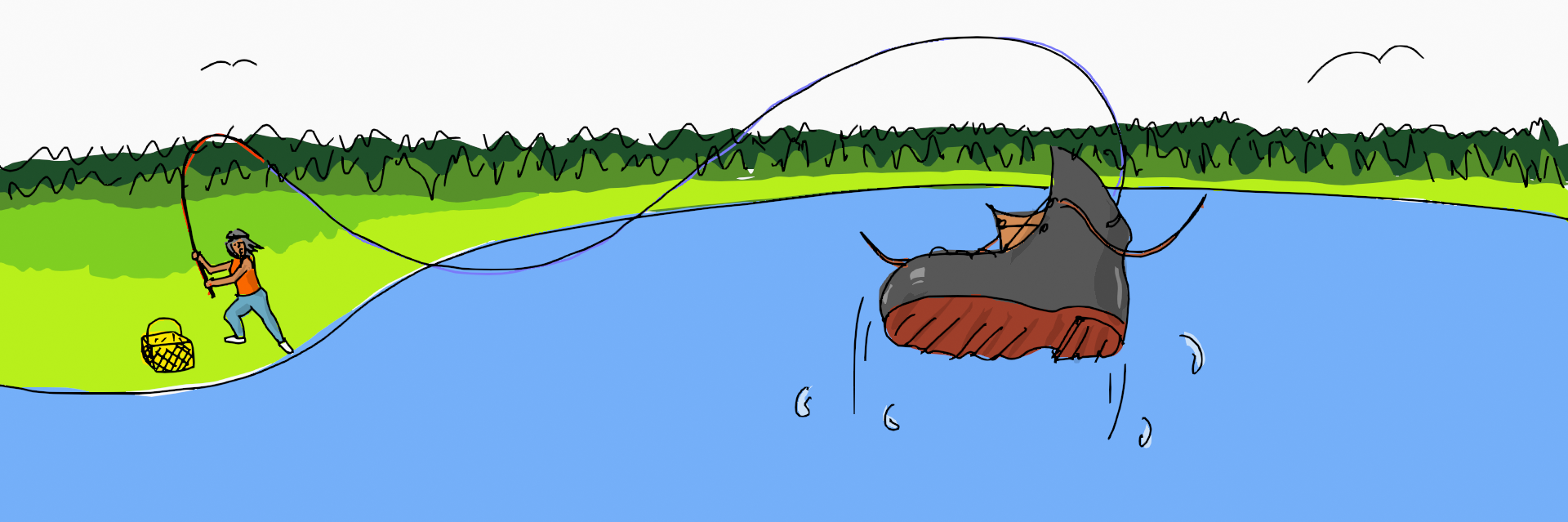
    • A woman fishes a boot out of a lake

      An interview is not a fishing expedition. You should know what you're going to get before you stick your microphone in the water!

    • Stay neutral

      Beginning interviewers tend to fawn over their interviewees. This is natural. We're genuinely grateful they agreed to speak to us, an as-yet unknown journalist. It also feels the right way to establish rapport. But to your listener (and sometimes even your interviewee) it can sound suspect at best, icky at worst. Try to avoid anything that sounds like you are taking the side of your interviewee:

      • Don't praise their accomplishments overly. Let the accomplishments speak for themselves through the interview.
      • Don't thank them gratuitously for the interview. A simple "thank you very much for your time" is enough.
      • Don't agree with them at the end of a statement. (eg. "Totally." "For sure." "That makes sense.")
      • Don't ask leading questions that take the side of the interviewee. (eg. "What the council did was wrong, wasn't it?")
      • Don't avoid difficult questions. If your interviewee makes a statement you know to be wrong, or is controversial, challenge them on it. 
      • Don't use the interview to make statements of your own (and in general don't make the interview about you.)

      Neutrality, of course, is an important topic in journalism. Journalists are expected to report on all sides of an issue equally and never take a side themselves. Some journalists, especially those in community radio, don't always hold firmly to this idea because they feel a sense of commitment to certain groups who they say don't get a fair hearing in the media. Even if this is your view, staying neutral works to your advantage. If you allow your interviewee to speak for themselves, on their own terms, without prompting from you, their case will come across more strongly. In fact, asking tough or adversarial questions gives them a chance to strengthen their case further. 

      And if that doesn't convince you to stay neutral, keep in mind that an interview where two people spend the entire time agreeing with each other is simply boring to listen to.

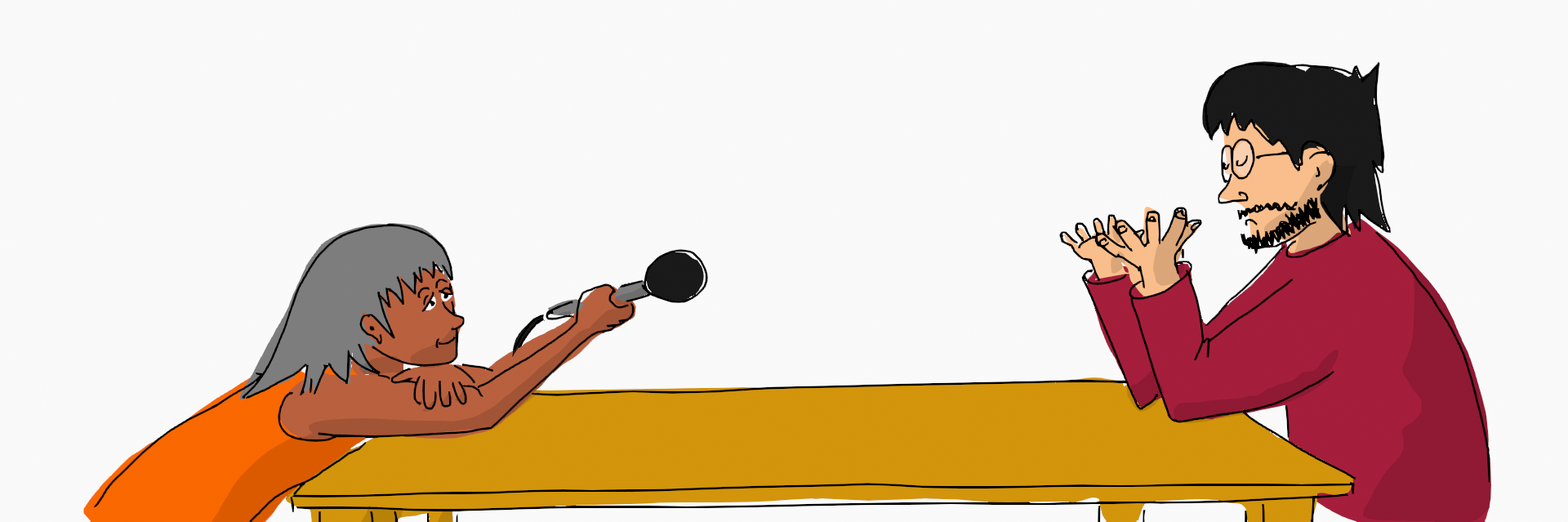
    • An interviewer gazes in rapture at her interviewee.

      Don't fawn on your interviewee.

    • Who, what, when, etc...

      You will often hear that journalism boils down to the 5Ws (and one H). All you need to do is answer the following questions about your topic and your piece is done.

      • Who?
      • What?
      • When?
      • Where?
      • Why?
      • How?

      That's easier said than done. If there is a house fire on Main Street, you can't possibly know the how and until the fire marshall completes their investigation. As to the why... well why does anything happen in this crazy world?

      On the other hand it is easy to get distracted by a particularly fascinating aspect of a topic and forget to inform your listeners of the basic facts. If you are interviewing an arson victim, people will want to know if the fire happened last week or last year, around the block or across town.

      The strength of the following interview lies in the character of the interviewee, their personal story and their commitment to their community. Nevertheless, the journalist is careful to include all the basic facts. Listen to it and see if you can answer all 5Ws (and one H). Can you answer "how many?" and "how much?"

    • 5Ws Interview

      Dan Jones


    • As important as it is to cover the basic facts, you should not use the 5Ws as an interview guide... unless you want to sound like this reporter covering a 50th wedding anniversary in BBC's mockumentary People Like Us.  

    • The Journalist

      People like Us (BBC)


    • If you record outside the studio, in a location that is significant to your story, remember to record the ambient sounds you hear around you. Sometimes called actualities or wild sound, these recordings will help immerse your listener in the time and place of the story. Listen to the following sounds and try to guess what it is your hearing. The images will give you a hint. Close your eyes and imagine you are there.


    • Keeping your ears open

      When you are in the field, you should be alert to any audio opportunities. You will start to develop an instinct for sound sources that can help tell your story. Make sure you take the time to record them all.

      Look at the following picture. How many possible sound sources do you see?

      A woman stand in a street holding up a microphone. Around her is a dog on a leash, children playing in front of a school with a flag. An airplane flies overhead. Behind her, someone can be seen taking a shower in an upstairs window, while an ice cream truck passes in front. In the foreground, a woodpecker clings to a tree, and in the distance two people are arguing.

      Now do the following activity and listen to the sounds. Did you get them all? 

    • In this activity you'll go out into the street with your microphone. Listen to all the sounds you can hear around you. Which ones tell a story?

    • When you record ambient sound, be sure to record enough of it: thirty seconds to a minute as a minimum. This will feel like an eternity at the time - especially as people around you wonder at your obsession with sounds they take for granted - but you will be grateful to have lots of sound to choose from when you get home. 

    • Using ambient sound

      Ambient sound can be played as background to a voice track, or "in the clear", with no voices over it. If the ambient sound is background, the voices over top may have been recorded at the same time. Here is an in interview recorded at a busy intersection.

    • Interview in downtown Casablanca

      Conrad Fox


    • Background sound can be inserted under the voice in post-production (see the section on mixing below.) Here the background sound was recorded on location, while the narration was recorded later in a studio. 

    • The medina of Rabat

      Conrad Fox


    • The ambient sound may be continuous, to set a scene or it may be a single event to punctuate your story. Listen to how the scene changes when the cistern cover is dragged. 

    • Dragging a cistern cover

      Conrad Fox


    • The ambient sound may go from in the clear to the under the narration, like the sound of tea being poured here.

    • Pouring tea

      Conrad Fox


    • Identify your ambient sounds

      It is tempting to let a really good ambient sound "speak for itself", leaving it in the clear without any explanatory voiceover. Unfortunately, that rarely works and you will just confuse your listener if you don't give them at least a clue about what it is they are hearing.  You could say something like "you're hearing the sound of a train" in your narration, but that is far too clumsy and obvious. Instead, build a description of the sound into your narration. For example: 

      • "With no warning the train starts up..."
      • "It is early evening and Mai's water buffalo are returning across the river."
      • "The women eagerly empty the recycling bin. There must be a thousand lempiras worth of bottles here."
      • "As we push through the brush, a spectacular waterfall comes into sight." 

      You can sometimes play the sound first, and identify it afterwards, but do not leave it unidentified for too long. If a listener is confused about what they are hearing for more than a few seconds, the sense of immersion will be lost... and you may lose your listener!

    • Faking audio

      It is very easy these days to find ambient sounds online or even generate them with AI, and very tempting to do so when you don't have the ambient sound you need. Surely the listener won't know that you didn't actually go to that spectacular waterfall or stand beside the train that they are hearing, (or did go but forgot to press record.)

      Journalism is all about trust with your listener. If you suggest the sound they are hearing is authentic, the listener trusts you. You wouldn't try to fool your listener by making up an interview clip, would you? Once you start eroding the trust with your listener the quality of your work will deteriorate, like a blog post full of bad stock imagery. Or this...

      Purported cell phone image of Donald Trump walking next to a shackled alien.

      Eventually your listener will notice.

    • After you record your audio,  you will almost certainly want to edit it in some way. This might be as simple as removing a few "ums" and "ahs" from your voices, or outtakes at the beginning and end of the interview, or as complex as combining many different pieces of audio such as different voices, ambient sound and music. Editing can be a very satisfying, creative process in which you produce a unique, cohesive whole out of disparate clips. But it can also be slow and even tedious, and you should rely too much on fixing mistakes in the editor that you could have gotten right the first time in the field. 

    • Editing software

      Audio is edited in a piece of software that is sometimes called a Digital Audio Workstation or DAW, a rather pompous term for... well, audio editor. There are many editors available, both free and paid, and they are mostly built on the same concepts, even if their interfaces and commands are different. Here are a few of the most popular.

      AUDACITY is entirely free and open source. It is a bit simplistic and has a clunkier interface than some of the other editors, although it has been improving rapidly since the company that makes it was sold to new management a few years ago. Audacity's strength is making quick edits to a single audio file, rather than multitrack mixing.

       REAPER is very reasonably priced (with a one-time payment) and allows an unlimited trial period. It is very full featured and - in the opinion of this writer - has the most ergonomic design for multitrack mixing and cross-fading clips together. Menus are a little bloated, however, and the interface can be tricky to learn.
      AUDITION is an Adobe product, and like most Adobe products is expensive and tied to a subscription rather than a one-time payment. It is an industry standard, however, having been around for decades, (it is a rebranded Cool Edit, one of the first ever multitrack audio editors). Unlike many editors, it allows for both destructive editing (in which an audio file is permanently changed) and non-destructive editing (which applies effects while leaving the original file untouched. 

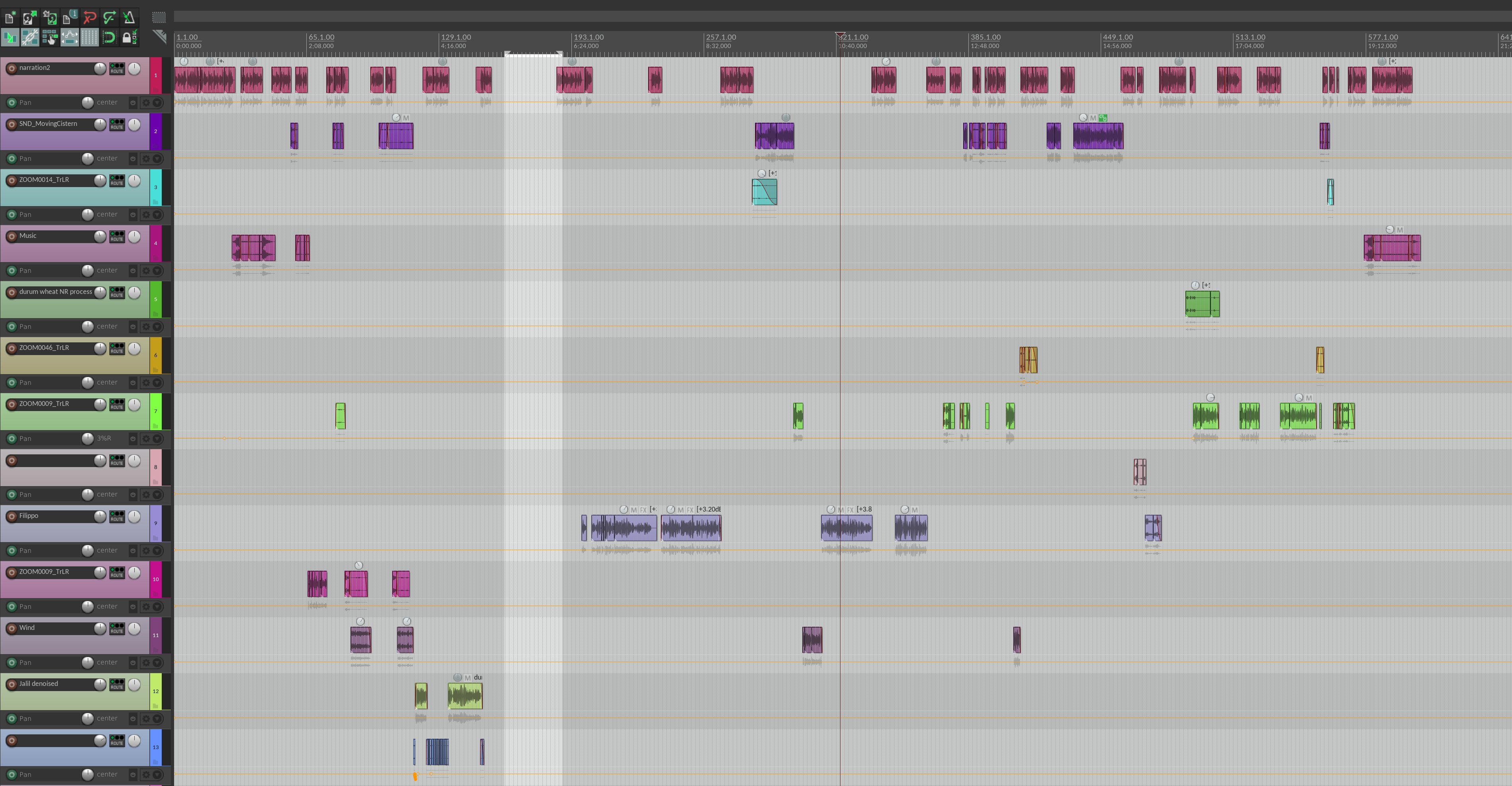
    • A screenshot of a DAW with at least ten tracks and close to a hundred different clips.

      Multitrack Reaper. Some projects can get pretty complicated, with dozens of tracks and even more clips. 

    • Audacity

      In this module, we're going to learn about the simplest of the editors, Audacity. Although it's a little clunky at times, it can do most of what more expensive software can, and the basic concepts of audio editing are the same across all software. Once you've mastered Audacity, you shouldn't have a problem working with others.


    • One of the most basic uses for editing software is adjusting the volume level of audio clips.


    • You can split a single clip into several, allowing you to edit them more easily, delete them and even move them around.


    • If you create several tracks in your editor you can play two clips at the same time.